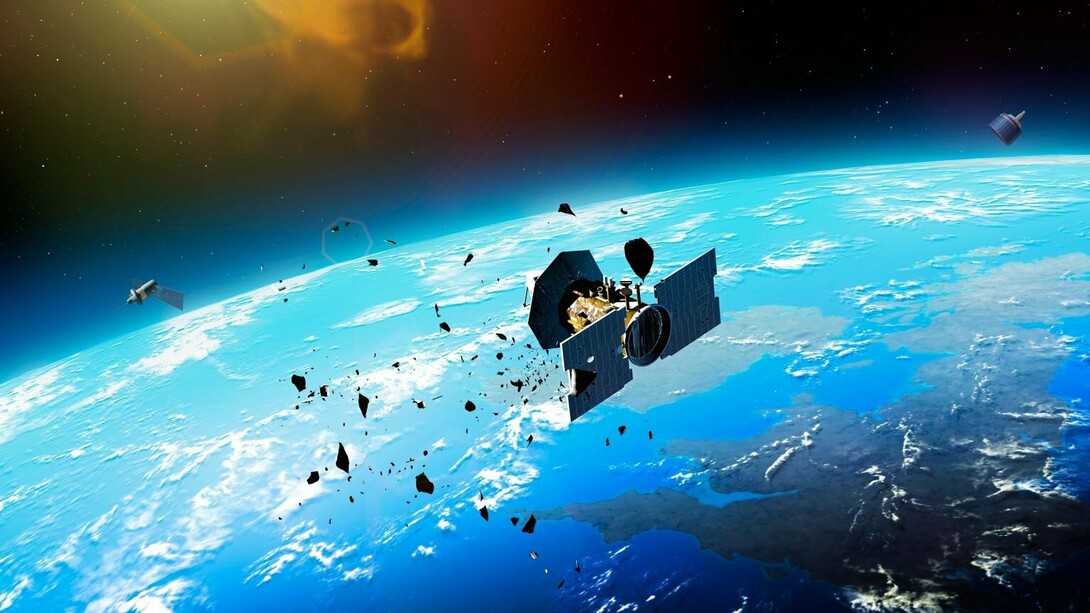
Space exploration has returned to the global spotlight, driven by technological advances, private investment, and renewed geopolitical ambitions. As missions multiply and new frontiers open — from satellites to lunar bases — we are increasingly faced with a critical question: does space represent a true opportunity for humanity, or a growing cost — economic, social, and ethical — that we are not fully prepared to bear?
Economically, space offers vast potential: innovation, job creation, and growth across key sectors like telecommunications, Earth observation, navigation, and security. Yet the price is high. Public funding for space programs can come at the expense of urgent needs on Earth, such as healthcare, education, or poverty reduction. On a social level, access to space risks reflecting — or even widening — existing global inequalities. A handful of powerful nations and corporations dominate space infrastructure, while many others remain excluded from the benefits and decisions that shape the future beyond Earth.
The ethical questions are even more complex. Who has the right to explore, exploit, or own resources beyond our planet? What principles should govern environmental sustainability in orbit or on other celestial bodies? And above all, what kind of future are we projecting into space — and for whom?
Space is a frontier of inspiration, but also of responsibility. Each step upward should be matched by reflection: on inclusion, equity, sustainability, and long-term vision. Harnessing its potential without losing sight of our values may be the greatest challenge — and opportunity — of our time.
Sperakers:
Frediano Finucci
Ezio Bussoletti
Ilaria Cinelli (PhD FAsMA)
Paul Nemitz
Giorgio Rutelli
Corrado Giustozzi
Robert Kroplewski
Anastasiia Shamatina
Alfonso Giordano
Gianluca Misuraca
Vittorio Calaprice
Tiberio Graziani
Francesco Lapenta
Gianluca Casagrande