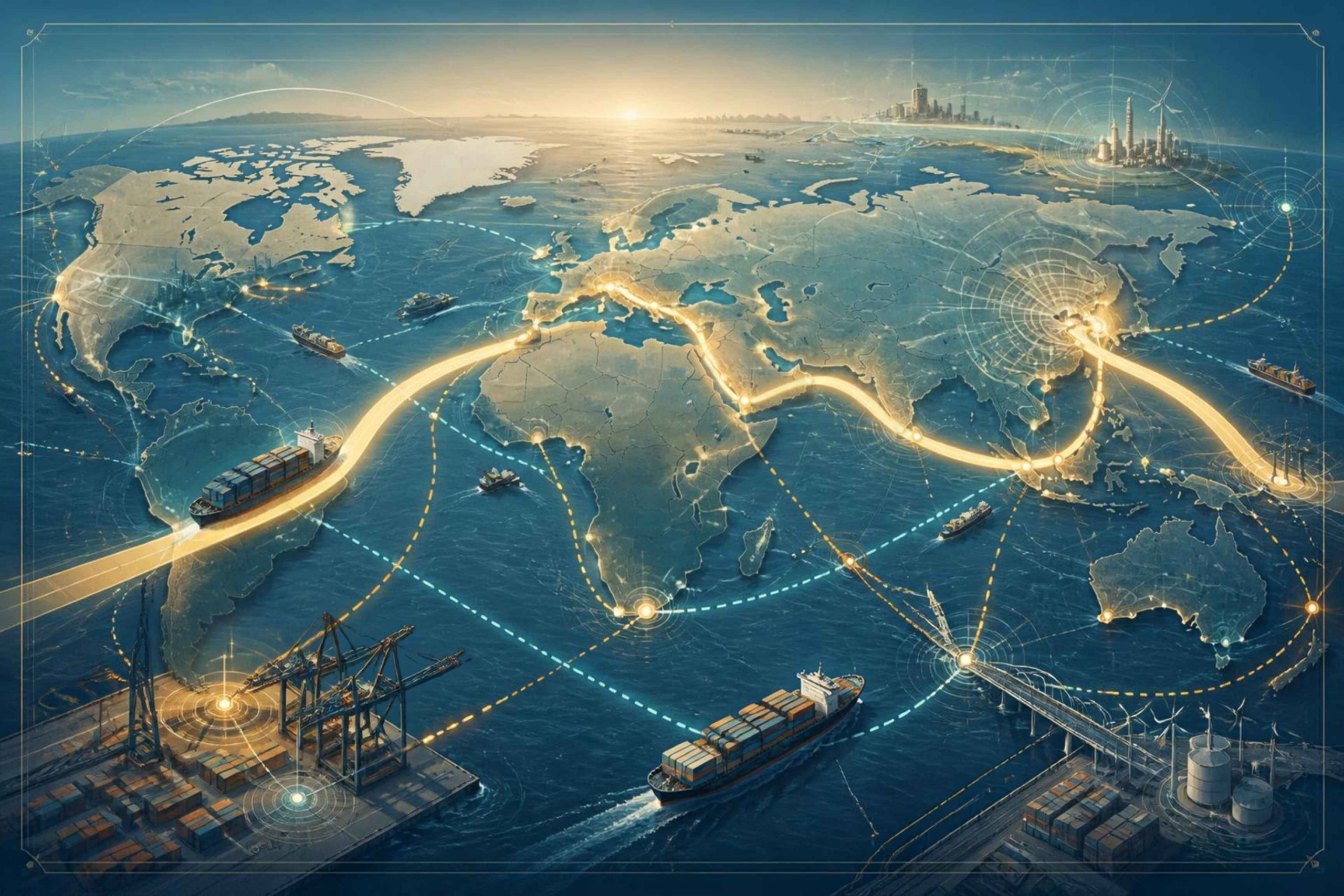
From the Red Sea to the Strait of Hormuz, the disruption of key maritime chokepoints has moved, in the space of a few years, from a theoretical risk to a recurring reality. Attacks on commercial shipping, the militarisation of contested waters, and the growing willingness of state and non-state actors alike to weaponize maritime access have exposed the fragility of a global trading system that depends, more than most people realise, on a handful of narrow and highly exposed passages of water.
In response, global shipping is quietly redrawing its own map. A growing share of traffic once destined for the Suez Canal now circumnavigates the Cape of Good Hope; the Arctic’s melting ice is opening entirely new polar routes between Asia and Europe; and land-based corridors such as the Middle Corridor across the Caucasus and Central Asia are being fast-tracked as alternatives to routes seen as too exposed to disruption. Each of these new routes carries its own trade-offs, in cost, transit time, environmental impact, and the geopolitical alignments they imply.
This panel examines freedom of navigation not as an abstract principle of international law, but as a concrete precondition for global supply chain resilience, and asks what it means to build that resilience through diversification rather than reliance on any single route. It explores the role of naval powers in guaranteeing safe passage along both traditional and emerging corridors, the infrastructure investment race now under way to capture new trade flows, and the extent to which this reshuffling of global shipping routes is itself becoming a new arena of great-power competition.