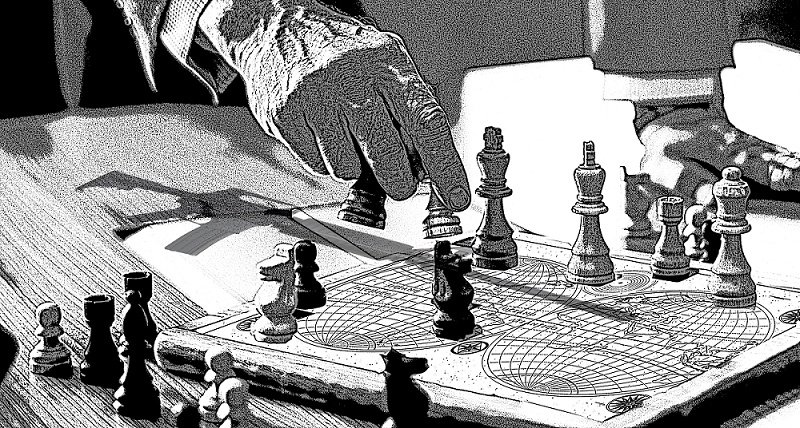
Dostoevsky published ‘The Gambler’ in 1866, where he analysed gambling in all its forms. What if his country had become, 160 years later, a new protagonist of the book?
Russia has developed various strategies over the years to become a global leader again. After Georgia, it was the turn of Ukraine. Following a series of pro-European demonstrations, which became known as Euromaidan, that began on the night of 21-22 November 2013, Russia launched its military and political offensive by resorting to the use of force, annexing the Crimean peninsula and using unconventional methods such as economic pressure, religious influence, propaganda, and political mobilisation. Although these actions have complicated Ukraine’s access to NATO, they have not diminished Kiev’s willingness̀ to join the European Union and join the Atlantic Alliance.
In 2021, Russian troops and armaments were concentrated near the borders with Ukraine. Moscow then made a series of demands, including a guarantee that no other state belonging to the former USSR could join NATO, the withdrawal of all armaments in neighbouring states, and the removal of NATO military infrastructure in Eastern Europe. Considering the maximal nature of these demands, they could not realistically be met by the US, Europe and NATO itself.
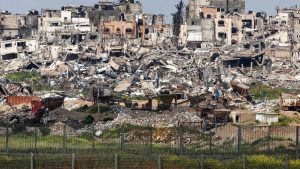
This led to the 2022 invasion of Ukraine, which may have initially aimed at regime change but now seems to be aiming at a complete demolition of Ukraine as a functional state. In fact, Moscow’s strategy includes the destruction of the country’s infrastructure, the reduction of its population, and ultimately the denial of its sovereignty. Russia’s challenge and gamble was to inflict exemplary punishment on Ukraine for its rapprochement with the West by turning it into a Russified buffer state. In addition to the consequences for Ukraine, however, the Russian ‘game’ was also a challenge for Europe. Energy, defence, and economics are just some of the situations that European countries have been called upon to face as they try to redefine their role in the global chessboard. Russia probably did not expect a united response from the European Union, which together with the United States and Great Britain instead sent a clear message of support to the aggrieved country, forcing Putin to reveal his cards, and questioning the outcome hoped for at the beginning of Russia’s dramatic gamble.